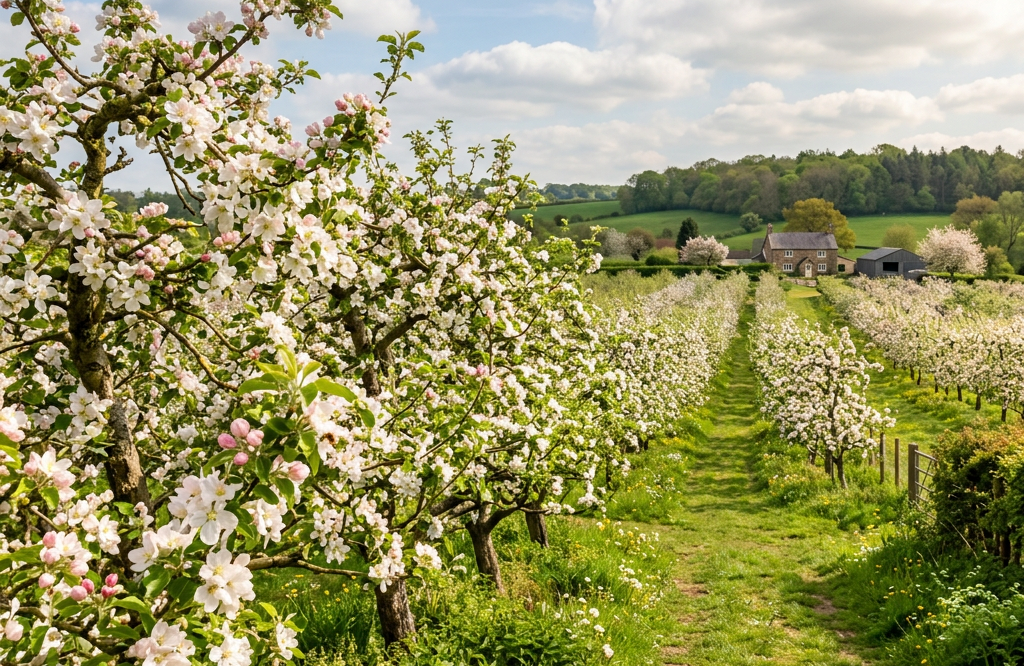
If it’s autumn along the Genesee, it’s apple time, cider time, and fry-cake time. For anyone who’s lived in Western New York, the familiar sight of bushel baskets of apples, jugs of cider, and boxes of melt-in-your-mouth fry-cakes at roadside produce stands is one of the pleasures of this time of year. Apples have been an integral part of the Genesee Valley since the time of the Senecas, who cultivated lovely orchards in the 1700s. American soldiers’ diaries recorded discovering well-tended apple orchards and other fruit trees on their trek to the Genesee River. However, those same patriot troops destroyed the majority of them during Sullivan’s campaign in 1779. As ubiquitous as apples are, they aren’t native to the United States and were introduced by colonists from England and Europe. Today, the New York Apple Association reports that there are over 11,000,000 apple trees in the state producing enough apples to make 500 million pies. Plus, New York grows more varieties of apples than any other state, from the heirloom 20 Ounce to the new Snap Dragon developed by Cornell.
Sweet and hard ciders, along with dried apples, were staples, stored carefully for the long winters in the 19th and early 20th centuries. Apples were often placed in wooden barrels and kept in cool root cellars throughout the winter months. Root cellars were essential for keeping many kinds of garden produce (potatoes, onions, cabbage, carrots) through the winter, and from personal experience, they are a valuable asset in the basement.
In the 19th century, cider making was a good sideline business for many, and my husband’s great-grandfather, Edward Quested of Portageville, made extra income during the fall months in the 1870s transporting apples and cider, according to his diary. He kept records of how many bushels of apples he took from individuals to be pressed, and how many gallons of cider he delivered back to his customers. Below you’ll find pages from his diary recording these transactions. Every community had someone with a cider press, and they were kept busy until late November if the apple harvest was good. You’ll find several newspaper ads from the 1800s showing that cider was a thriving business, as was making apple cider vinegar. Hard cider was common too, even throughout Prohibition (1920-1933), but it wasn’t like today’s crafted hard ciders that you’ll find at Three Falls Cider in Castile/Castile Cider Mill and Buried Barrel Hard Cider on Denton Corners Road near the Letchworth State Park entrance.
But if we step back in time, we find that the Glen Iris Orchard Company predates these businesses, starting on Glen Iris Road in 1911. On May 1, 1911, business partners Harold W. Phillips (President), Charles A. VanArsdale (Vice President), J. Harry VanArsdale (Secretary/Treasurer), and James M. Scott (Manager) purchased 190 acres of farmland for $12,000 from Byron Fuller on Glen Iris Road, about three miles from the village of Castile. These four men had strong family ties, since Harold was Charles’ brother-in-law, and James’ wife was also a Phillips.
The Phillips family had owned and operated several successful businesses in Castile for many years, including a general store and a hotel at the depot called the Post House, but their main business was produce, principally potatoes and apples. When William D. Phillips retired, his son Harold took the reins, and he was eager to expand the business. Harold was also interested in owning orchards, and that’s when the Glen Iris Orchard Company was formed. The VanArsdale family owned adjoining land to the Fuller farm, which made the location ideal, and the property already had an established orchard. In August 1911, the Nunda News reported that the new business expected an abundant harvest and had to prop up limbs on the heavily laden apple trees, especially the Baldwin apples.
In May 1912, the company planted 4,000 apple trees on 60 acres and planned to plant 3,000 more in the following years. The orchards were labor-intensive, employing many men year-round to prune, clear land, and care for teams of horses, sheep, and equipment. Ads for seasonal workers appeared in all the local newspapers beginning in August, when apple picking began. The Glen Iris Orchard Co. was often in the newspapers, reporting on the black rat snake population that could be a nuisance, or finding rattlesnakes in the orchard. Accidents also occurred: horses were lost to illness or injury, men were injured on the job, and sheep were killed by loose dogs. Herds of deer were also perennial problems in the orchards, stripping bark from the trees in the winter and helping themselves to the apple crop. The business received permission from the state multiple times over the years to open a special deer season for hunters to clear out the large herds on the property. This special season was especially welcome in 1945 when meat was rationed, and hunters had the chance to provide venison for their families.
In 1916, the VanArsdales built a summer home at a high point above the mouth of Wolf Creek, affectionately called the “shack.” It was far from being a shack, as a Rochester architect designed the bungalow. Not only was it used for the Phillips and VanArsdale families to enjoy its scenic views, but it also became a popular gathering place for many Castile clubs to meet. Dinners and events were held in the secluded location. That same year, newspapers reported that the farm shipped large quantities of apples to city markets in bushel baskets. The farm also became an annual stop on the Wyoming County Farm Bureau’s farm management tour in the 1920s, and participants were treated to picnic lunches at the “shack.”
By 1918, apple production was up, more acreage had been added to the farm, and John E. Eddy’s cooperage shop near the Castile depot received an order from the business for 2,000 apple barrels. But soon a cooperage shop was constructed at the farm, which made the barrels for apple storage and shipping by rail.
In February 1924, Charles and Harry VanArsdale, along with James Scott, sold their interests to Harold Phillips. The VanArsdale brothers pursued the banking business (Bank of Castile), and James Scott also changed his career path.
Despite lower prices and the challenges of the Great Depression, the Glen Iris Orchard reported shipping 12,000 bushel baskets of apples, enough to fill two train cars, in 1930, with a heavy crop expected. In 1932, a bushel of McIntosh apples sold for 50 cents, and Winesap apples were 75 cents. During the time that Harold owned the farm, he also planted potatoes and beans, continuing to expand the acreage. The farm won several prizes in January 1933 at the New York Horticultural Society’s competition for both red and green apples. In June 1936, The Perry Record wrote about the challenges facing New York orchards: ice storms, disease, and pests had decimated many commercial orchards in the area, but Glen Iris Orchard continued to thrive through good farming practices.
But on June 1, 1937, Harold died at age 51, leaving the farm’s future in question. His obituary stated he died in the same room where he was born in 1885 and had lived his whole life in Castile. The Phillips’ only son, Donald, was in college in Texas and wasn’t in a position to take over the business, so the property was sold to Mrs. Margaret Smith Whyte of Elizabeth, New Jersey, around 1940. The orchard business wasn’t for Mrs. Whyte, and she sold the farm to the Thomas Elster Wholesale Produce Company in Buffalo in 1943. Willard Sherman was the farm manager at that time, and the orchards flourished while he and Thomas Elster oversaw them. Because of the worker shortage during World War II, 250 men who were police officers, firemen, and letter carriers from New York City were sent to the Stony Brook camp for a two-week “vacation” in August 1943. They were available to farmers for harvesting crops during their respite from the city. More women also joined the seasonal pickers as well to help pick apples.
In 1945, severe late-spring frosts threatened to decimate the crop, and hungry deer feasted on the lower blossoms from the trees. Besides using smudge pots at night in the orchards, Elster purchased pollen from the State of Washington at $4/oz and had it airmailed to him. Pollinators were also scarce that year, so he added 60 bee colonies to the orchards. Along with the bees’ help and hand pollination, he managed to save the crop when others lost their entire harvest.
By the 1950s, apple production in the state was down when the popularity of canned fruits, such as peaches, drove apple prices down. In 1956, Elster sold the property to Frank Walkley, who owned surrounding properties, and in 1969 Harry Pankow purchased the land. Some of the original orchards are still used today to make Buried Barrel Hard Cider, which continues the long tradition of apples in the Genesee country.
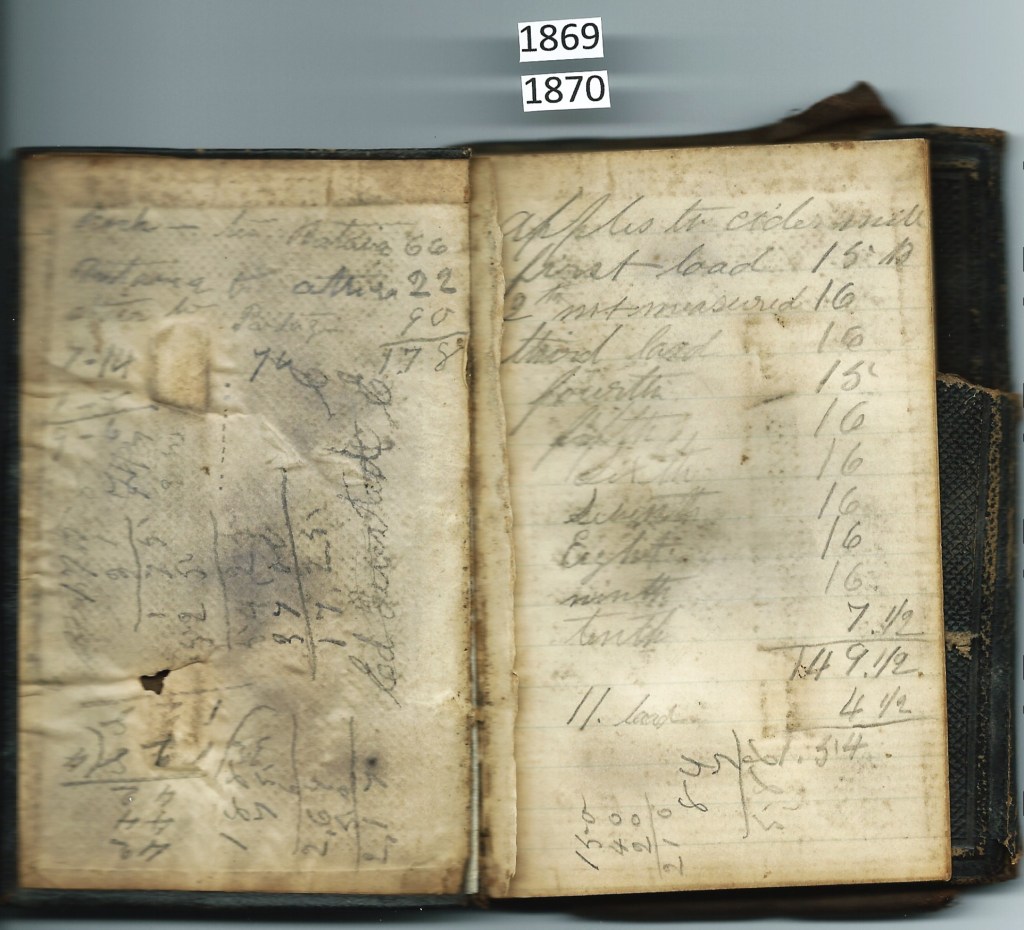
Apple Log 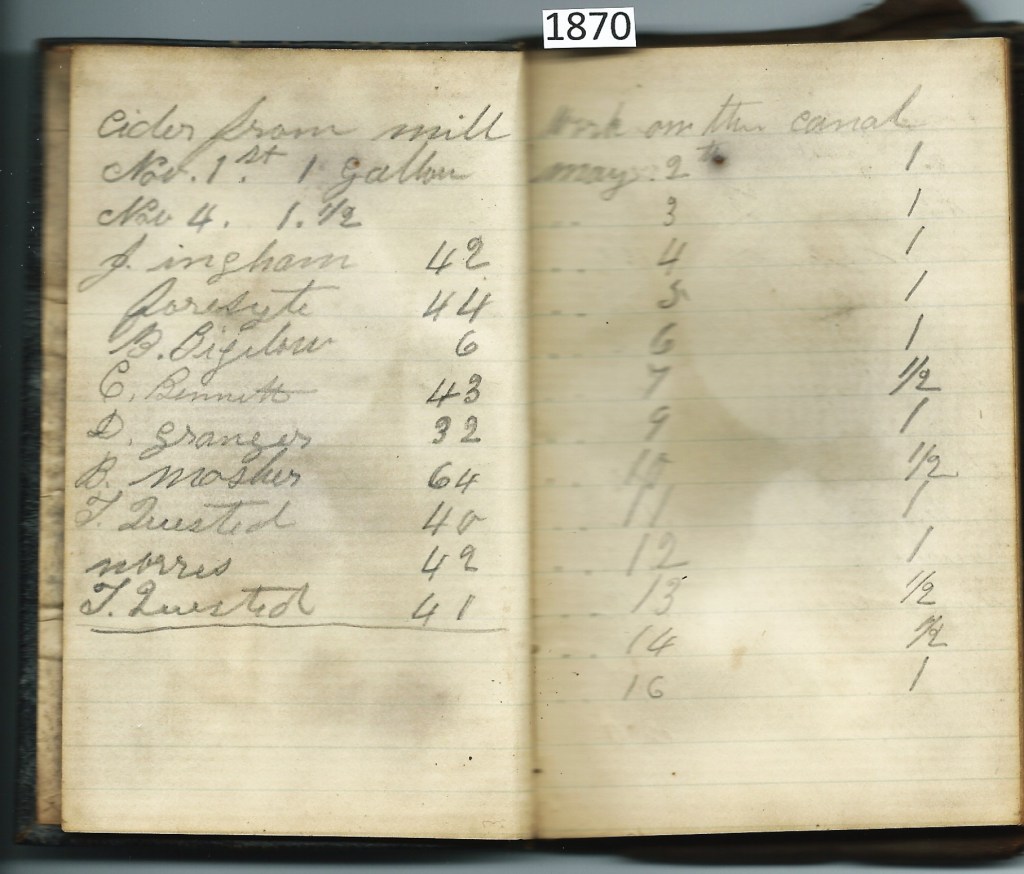
Cider Log 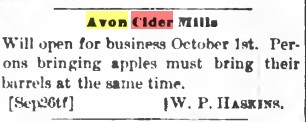
Liv. Co. Herald 1878 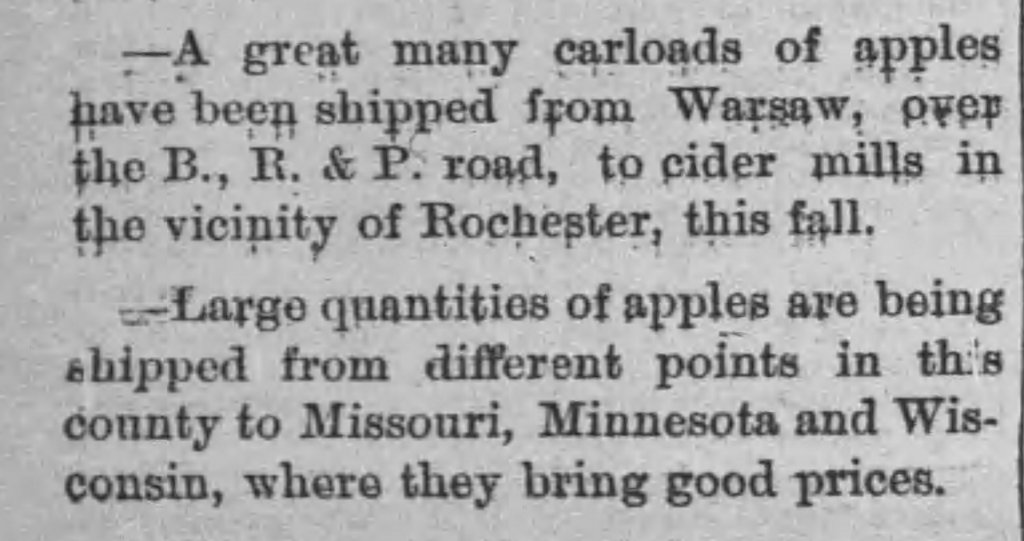
Western New Yorker 1885 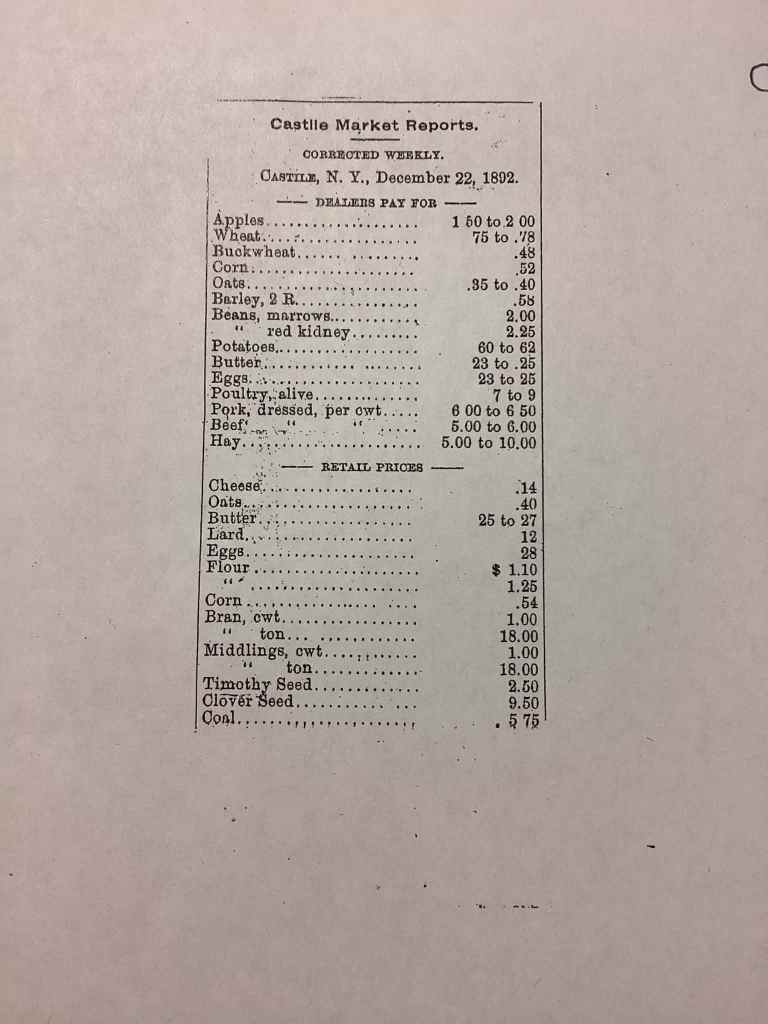
Castile Market Report 1892 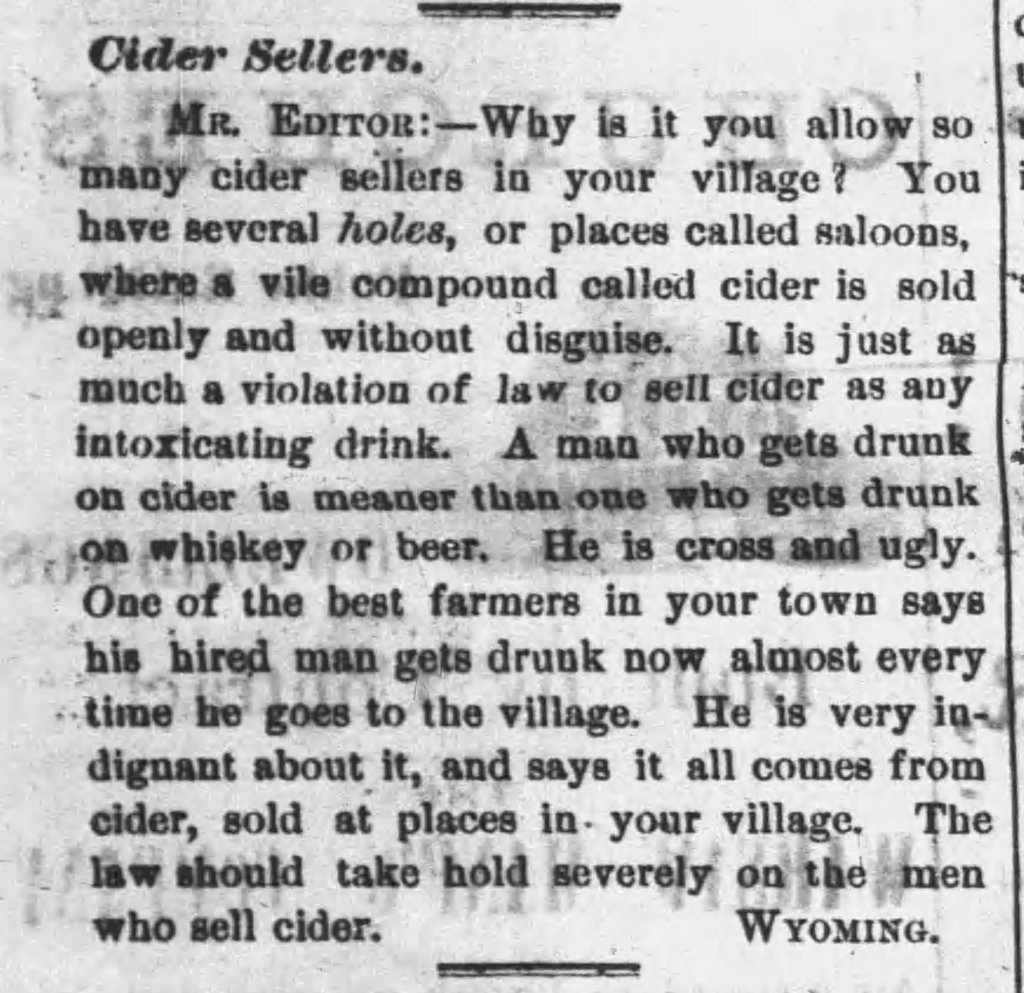
Cider Complaints 1875 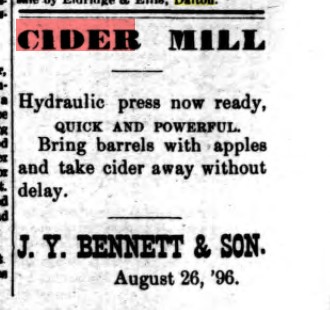
Dalton Enterprise 1896 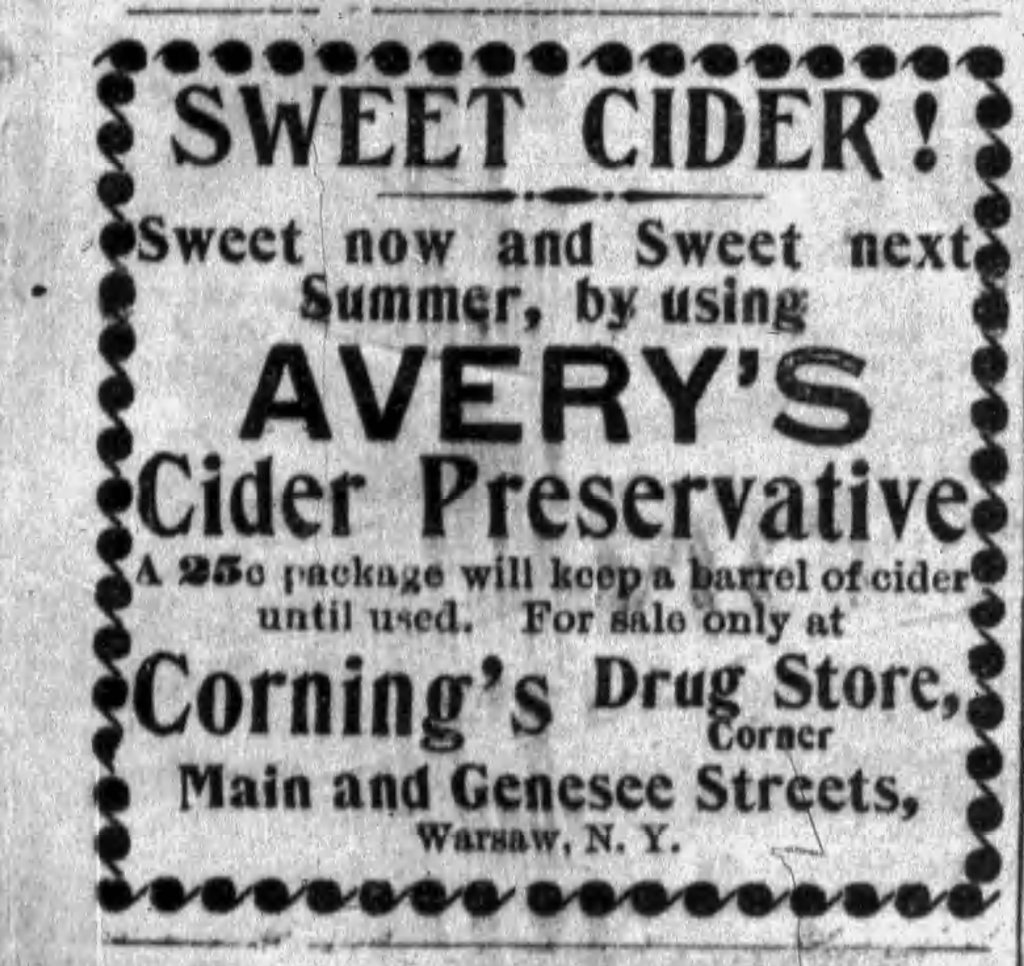
Cider Preservative – Western New York 1896 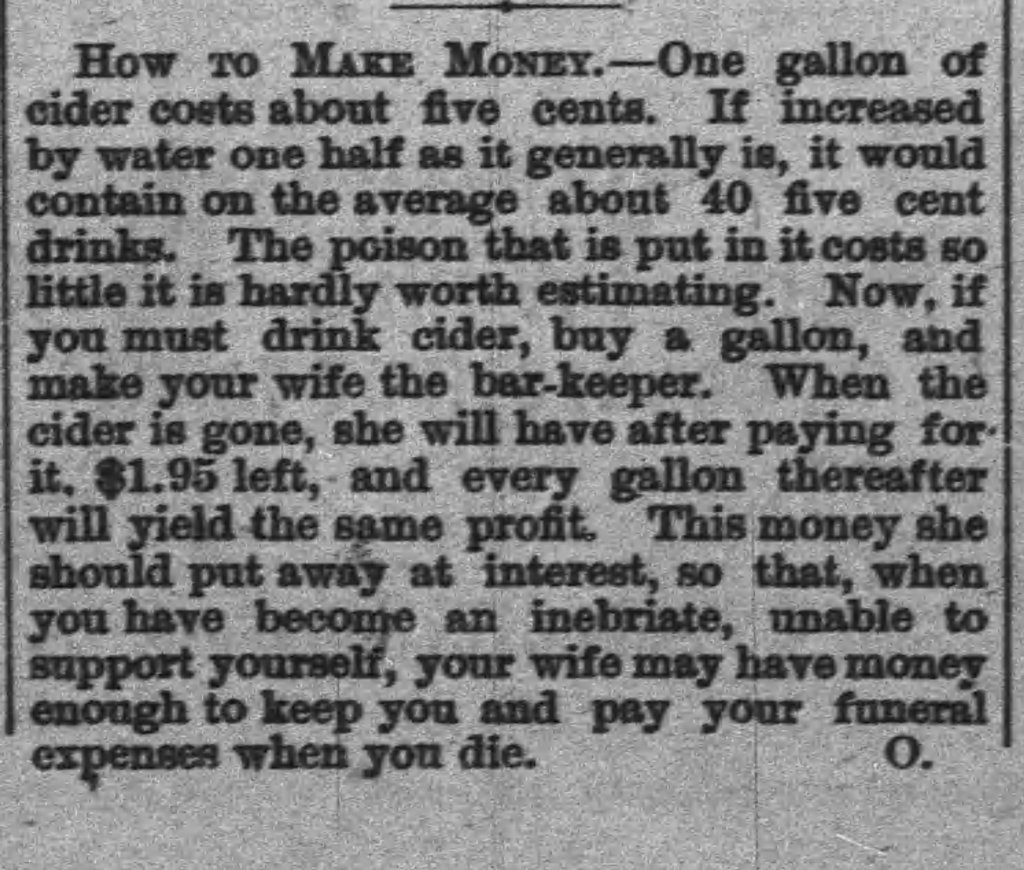
Cider Sarcasm 1890 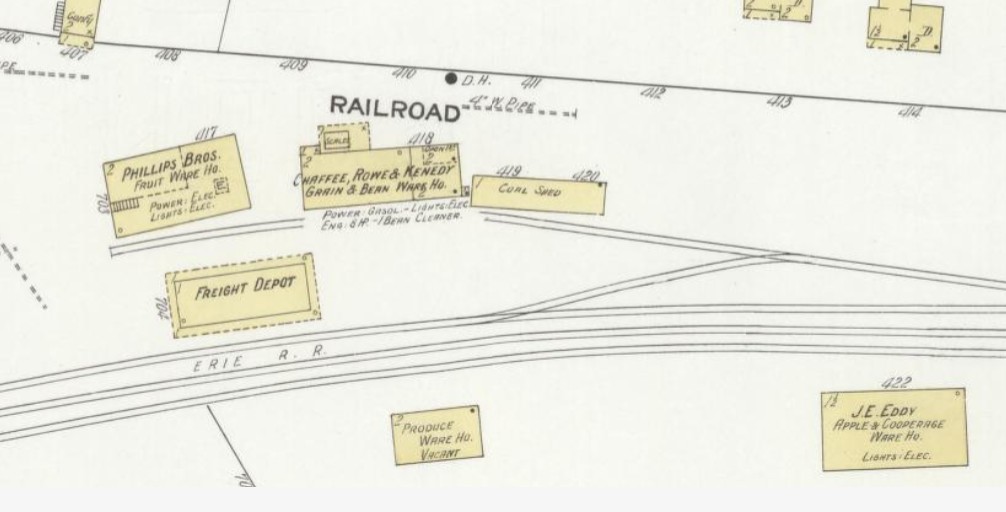
Map showing warehouses and cooper’s shop at Castile in 1912. Library of Congress 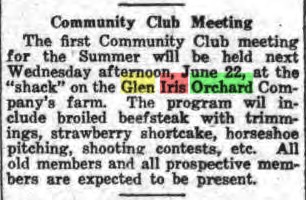
Castile Community Club at the “shack” 1937 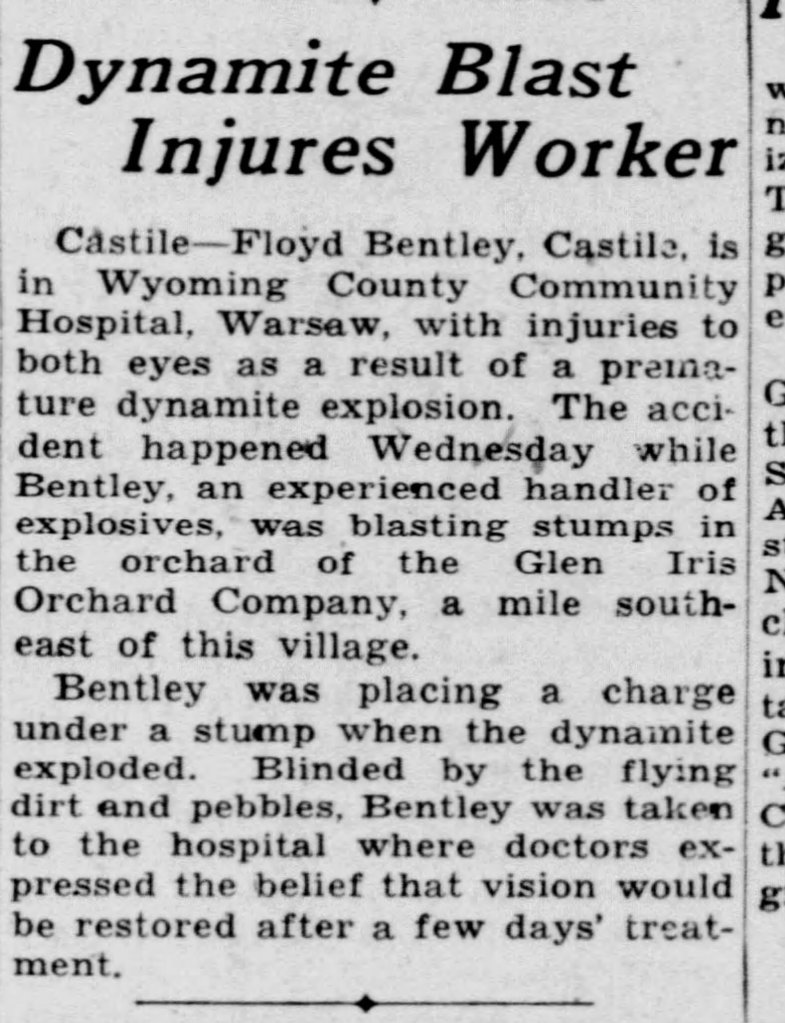
Dynamite Accident, Roch. D & C 1943 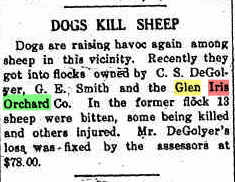
Dogs Killing Sheep, Castilian 1921 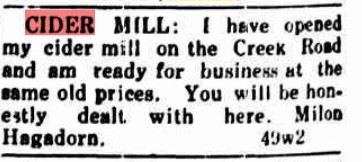
Nunda Cider, Nunda News 1916 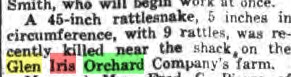
Rattlesnake, Perry Record 1929 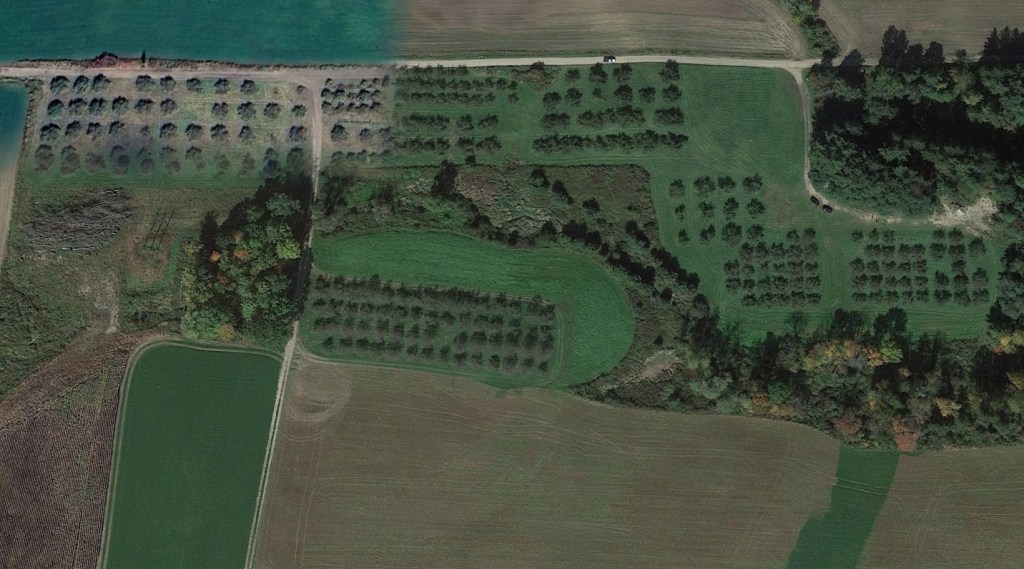
Pankow Orchard, Google Earth Photo
Resources:
Buried Barrel Hard Cider
Castile Historical Society records
Historical Wyoming, April 1958
Castilian, various years
Perry Record, various years
Silver Springs Signal, various years
Daily News, various years
Buffalo News, various years
Rochester Democrat & Chronicle

